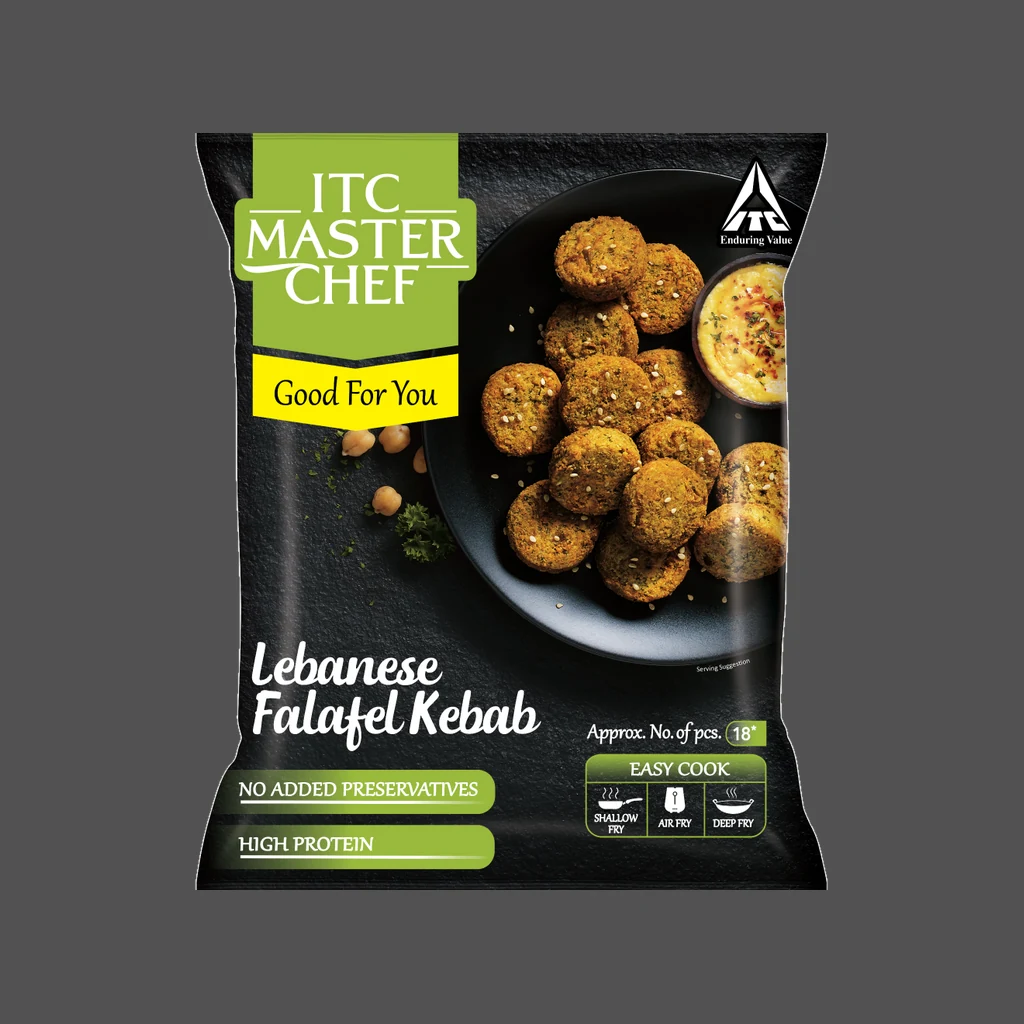
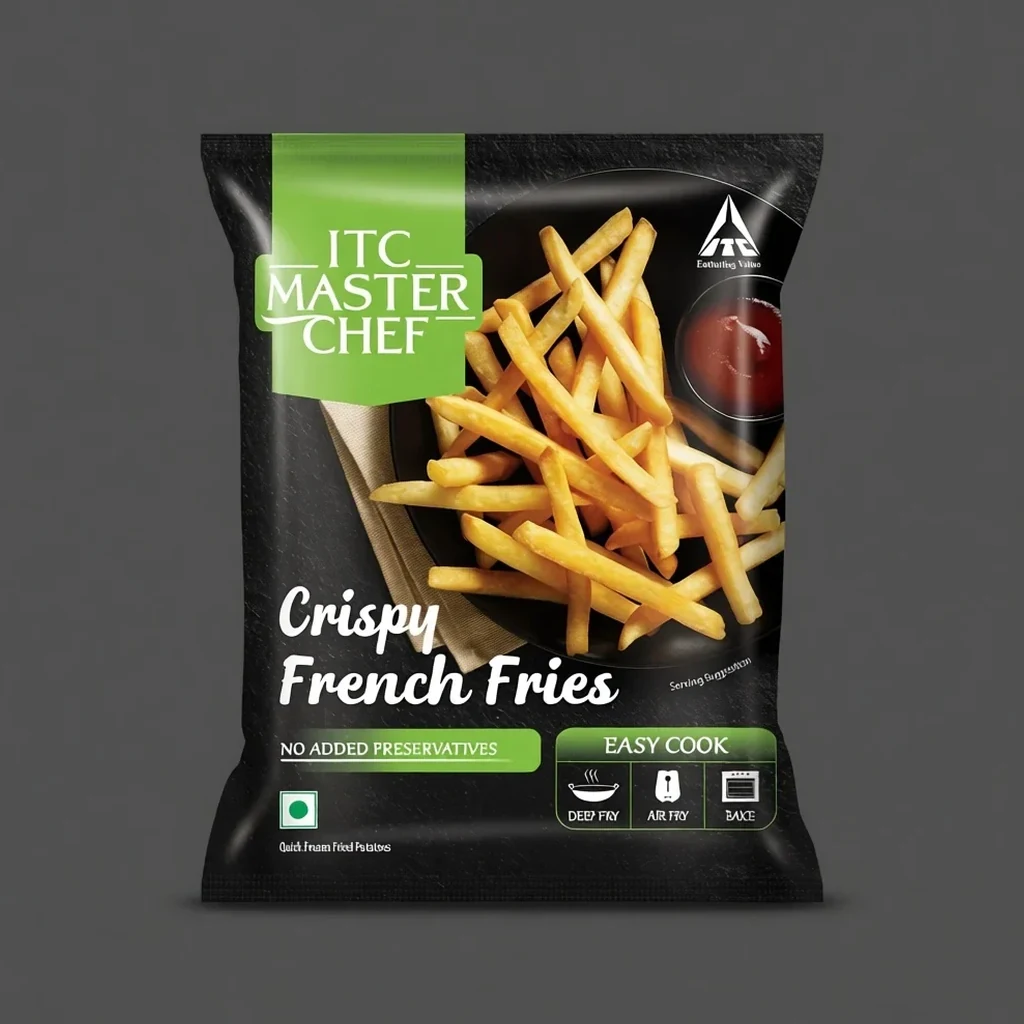
Honesty first: most vegetarian frozen snacks are not high-protein foods. Potato and vegetable-based formats run 2-8g per 100g, chosen for taste and texture, not protein. The vegetarian formats that do carry protein are the paneer- and soy-based ones (8-12g/100g) and falafel-style chickpea formats (8-10g). The good news: vegetarian pairings, curd, milk, sprouts, hummus, peanuts, add useful protein, so a well-built veg plate can reach a similar total to a non-veg snack plate‡. The plate does what the snack alone cannot.
On this page
The vegetarian protein map
| Format | Protein (per 100g) | Honest verdict |
|---|---|---|
| Paneer-based snacks (other brands) | Varies by brand; check the pack | A strong vegetarian protein format |
| Soy-based kebabs/patties | 10-12g | Strong, often under-rated |
| Falafel / chickpea formats | 13.6g* (ITC Lebanese Falafel Kebab) | Legume protein, the range's veg protein pick |
| Dal-based tikkis | 6-9g | Moderate |
| Veg kebabs (spinach, mixed veg) | 4-8g | Taste pick, not protein pick |
| Potato formats (fries, shots, tikki) | 2-4g | Zero pretence: texture food |
| — Pairings per serving — | ||
| Curd bowl (150g) | 5-6g | The universal lifter |
| Milk glass (200ml) | 6-7g | Easiest add |
| Sprouts (100g) | Adds protein; varies by type | The quiet champion |
| Hummus (3 tbsp) / peanuts (30g) | 4-8g | Flavour + protein in one |
Building the 15-gram vegetarian plate
The formula: one 8g+ format plus two pairings. Falafel kebabs with hummus and a milk glass: ~17g§. Hara bhara kebabs (5.0 g protein per 100 g, as per pack) are a taste pick, so pair them with curd and a sprout salad; falafel also works with buttermilk and peanuts. Even the potato-format lover gets there: potato shots beside a sprout-curd bowl reaches ~13-14g, the shots supply joy, the bowl supplies protein, and the plate is honest about which is which.
Reading veg packs for protein
Check three things: the green FSSAI dot (vegetarian status), the first ingredient (paneer/soy/chickpea first = protein-forward; potato/water first = texture-forward), and the per-100g protein line. A 'source of protein' claim on a vegetarian pack is governed by the same FSSAI rules as on any other pack, so it is a useful cross-check alongside the per-100g protein line, which makes it genuinely useful for cutting through wishful labelling.
Your questions, answered
Which vegetarian frozen snacks are high in protein?
Chickpea formats lead in our range: ITC Master Chef Lebanese Falafel Kebab carries 13.6 g protein per 100 g† and a 'High protein' claim on pack. Potato and vegetable-based formats run far lower, about 2-8 g*.
How do vegetarians hit protein targets with snacks?
The plate formula: one 8g+ format plus two pairings (curd, milk, sprouts, hummus, peanuts). A falafel-hummus-milk plate reaches ~17g, matching a non-veg plate.
Is there protein in french fries or potato snacks?
Minimal, 2-4g per 100g. Treat potato formats as the texture-and-joy component and put the protein in the pairing beside them.
Are soy snacks a good protein source?
Soy-based snacks vary by brand, so check the protein per 100 g on the pack you are buying.
* As per pack nutrition label, per 100 g.
† As per pack nutrition labels, per 100 g.
‡ Approximate; depends on portions. See the estimates below. Not dietary advice.
§ Approximate, per plate; snack protein from pack nutrition labels, pairing values from standard food-composition tables. Not dietary advice.