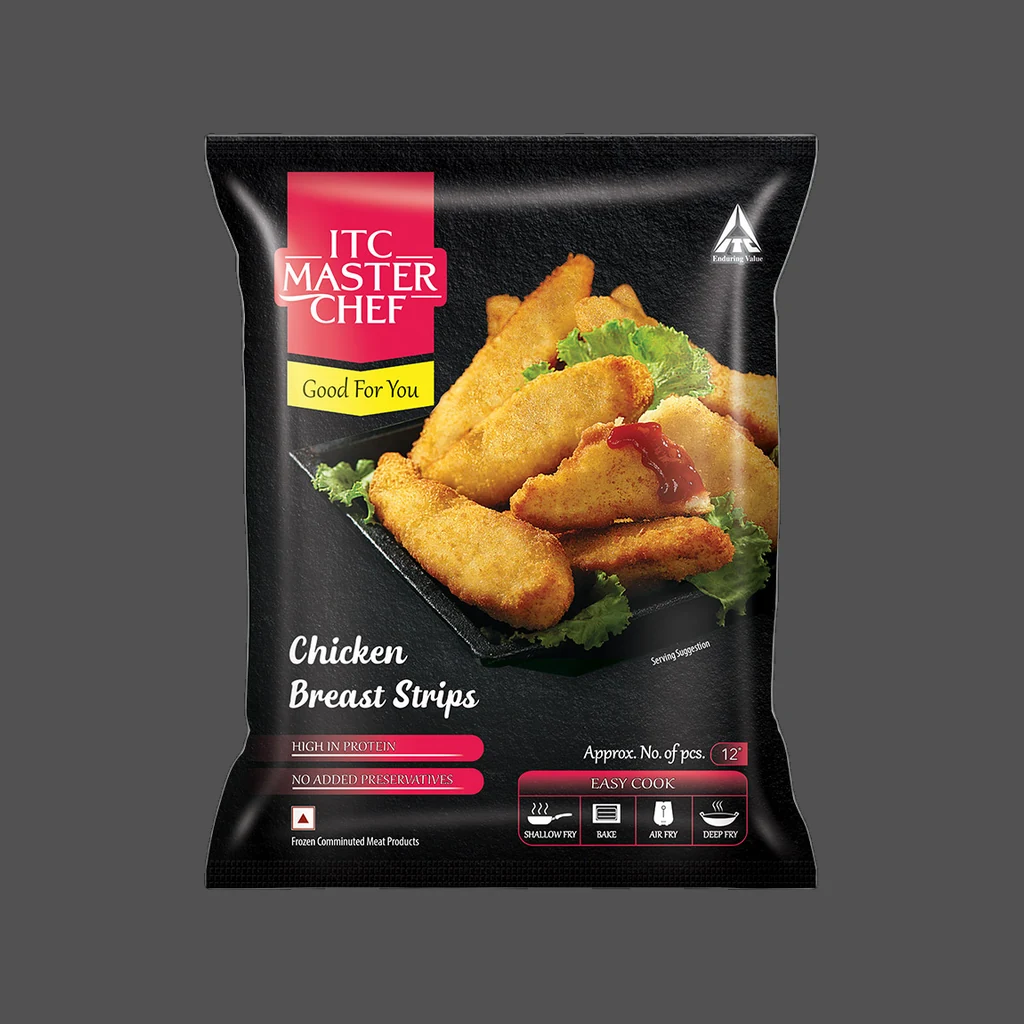
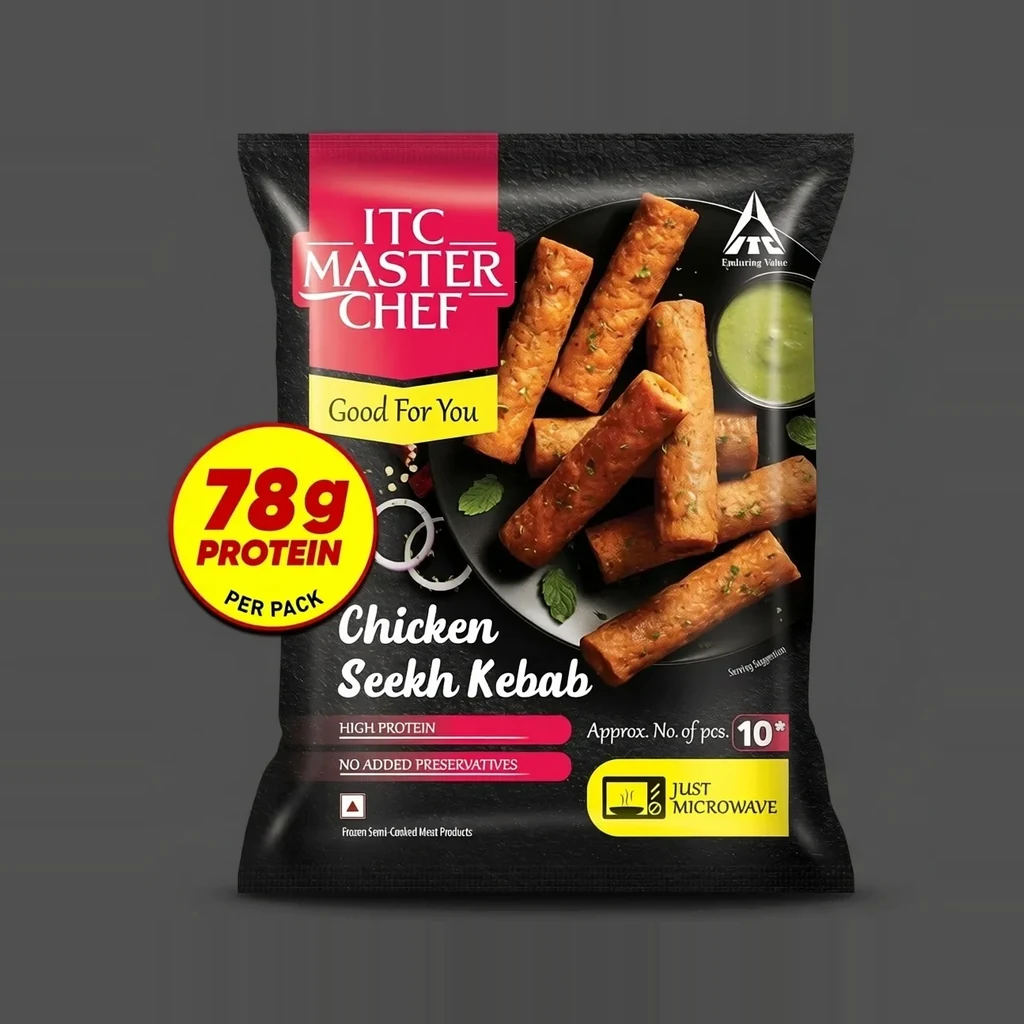
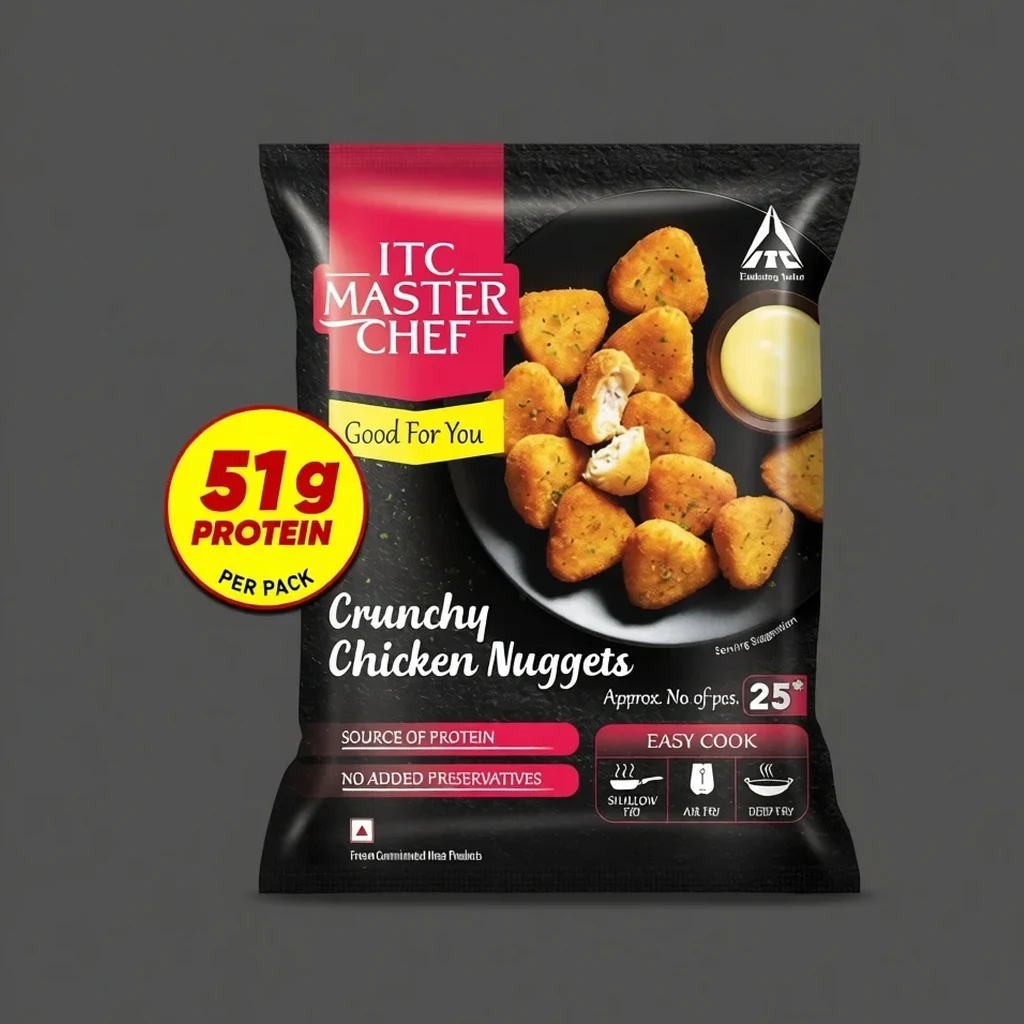
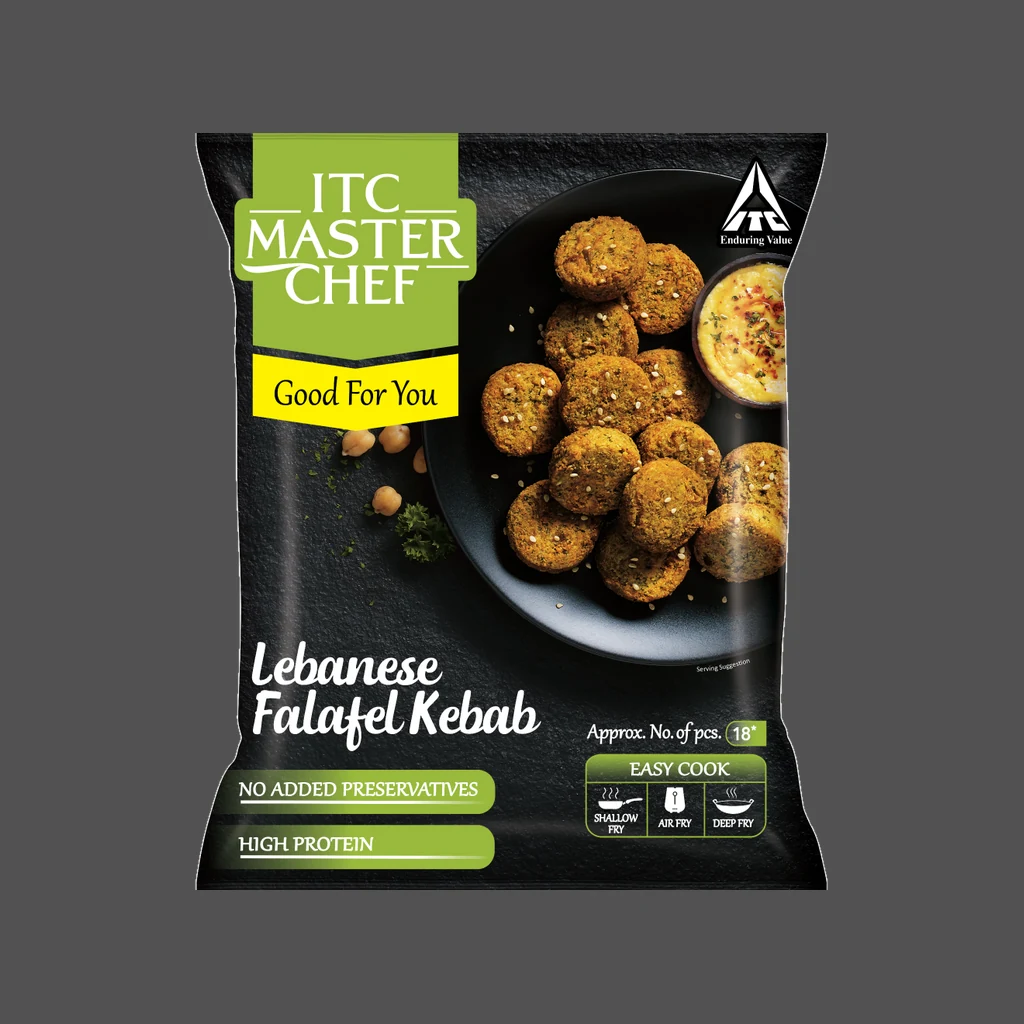
Frozen snack categories sort into clear protein tiers. Per 100g, typical ranges: whole-muscle chicken formats (breast strips, grills) lead at roughly 14-20g; minced-chicken formats (kebabs, patties, nuggets) run 10-14g; prawns sit around 12-16g; paneer and soy-based veg snacks 8-12g; and potato formats 2-4g, potato snacks are a texture pleasure, not a protein source. Every pack's own per-100g table settles its exact number in ten seconds.
On this page
The category chart
Typical per-100g ranges across the category; always confirm on the specific pack:
| Category | Protein (per 100g) | Tier |
|---|---|---|
| Chicken breast strips / grills (whole muscle) | 14-20g | Highest |
| Chicken seekh kebab / patties (mince) | 11-14g | High |
| Chicken nuggets / popcorn (coated) | 10-13g* (ITC packs: 11.3g / 11.5g) | Rank 3 |
| Prawns (peeled) | ~17g (ITC Prawns: 17.1g, to be confirmed against current artwork) | Rank 2 |
| Paneer / soy-based veg snacks (other brands) | Varies by brand; check the pack | Rank 5 |
| Veg kebabs and tikkis (vegetable base) | 4-8g | Rank 6 — add row: Falafel / chickpea (ITC Lebanese Falafel Kebab) |
| Fries / potato shots / tikki (potato) | 2-4g | Low |
Why the tiers fall where they do
The ordering is ingredient logic. Whole-muscle chicken is mostly muscle protein with minimal coating. Mince formats add binders and spices, diluting slightly. Coated formats add a crumb layer, flavour-positive, protein-neutral. Veg formats depend on their base: paneer and soy carry real protein; potato and vegetable bases carry little. The coating-to-core ratio is the quiet variable: bigger pieces generally mean more core and relatively less coating per 100g.
Reading claims correctly
Under FSSAI nutrition-claim rules, 'source of protein' and 'high in protein' are regulated nutrition claims with defined conditions under Schedule I of the FSSAI (Advertising and Claims) Regulations, 2018, so a pack may carry them only if the product meets those conditions, not a marketing one. The pairing trick still applies at the plate: a 10-12g/100g snack plus a bowl of curd or a glass of milk makes a snack that genuinely counts toward the day's protein.
Your questions, answered
How much protein is in chicken nuggets per 100g?
Coated chicken formats typically run 10-13g per 100g; the pack's own nutrition table gives the exact figure. Whole-muscle strips run higher, 14-20g.
Which frozen snacks have the most protein?
In the ITC Master Chef range, Crispy Spicy Chicken (17.7 g†), prawns (17.1 g*) and Chicken Breast Strips (14.9 g*) lead, followed by Spicy Chicken Grill Patty (13.9 g*), Lebanese Falafel Kebab (13.6 g*) and chicken nuggets, popcorn, patties and malai seekh kebabs (10.2-11.9 g*).
Do veg frozen snacks have protein?
Paneer and soy-based formats carry a moderate 8-12g/100g; potato and vegetable-based formats carry little (2-8g). Pair veg snacks with curd or milk to lift the plate.
What does 'source of protein' on a pack mean?
A regulated FSSAI nutrition claim with defined conditions under Schedule I of the Advertising and Claims Regulations, 2018; compare it with the per-100g protein figure in the nutrition table.
* As per pack nutrition label, per 100 g. Ranks compare protein per 100 g only and are not nutrition claims.
† Per 100 g, as per pack nutrition labels. Prawn value to be confirmed against current ITC artwork.