On this page
The short answer
Freezing is a preservation method, not an ingredient. Held at -18°C, food is preserved by temperature alone, which is why many frozen products are made with no added preservatives. Freezing itself does not make food less nutritious; in many cases it holds the food in the state it was in when frozen.
Myth 1: Frozen food is full of preservatives
Freezing slows spoilage, so many frozen products need no added preservatives, and packs that qualify say so on the label. Some recipes (for example with sauces or processed cheese) may still include one; the ingredient list will tell you. Check the label: 'no added preservatives' on a frozen pack is a direct benefit of the cold chain doing the preservation work.
Myth 2: Freezing destroys nutrients
Freezing itself generally causes relatively little nutrient loss compared with long ambient storage or repeated reheating. Commercial quick-freezing (IQF) is faster than home freezing, forming smaller ice crystals that better preserve texture and cell structure.
Myths 3-7, quickly
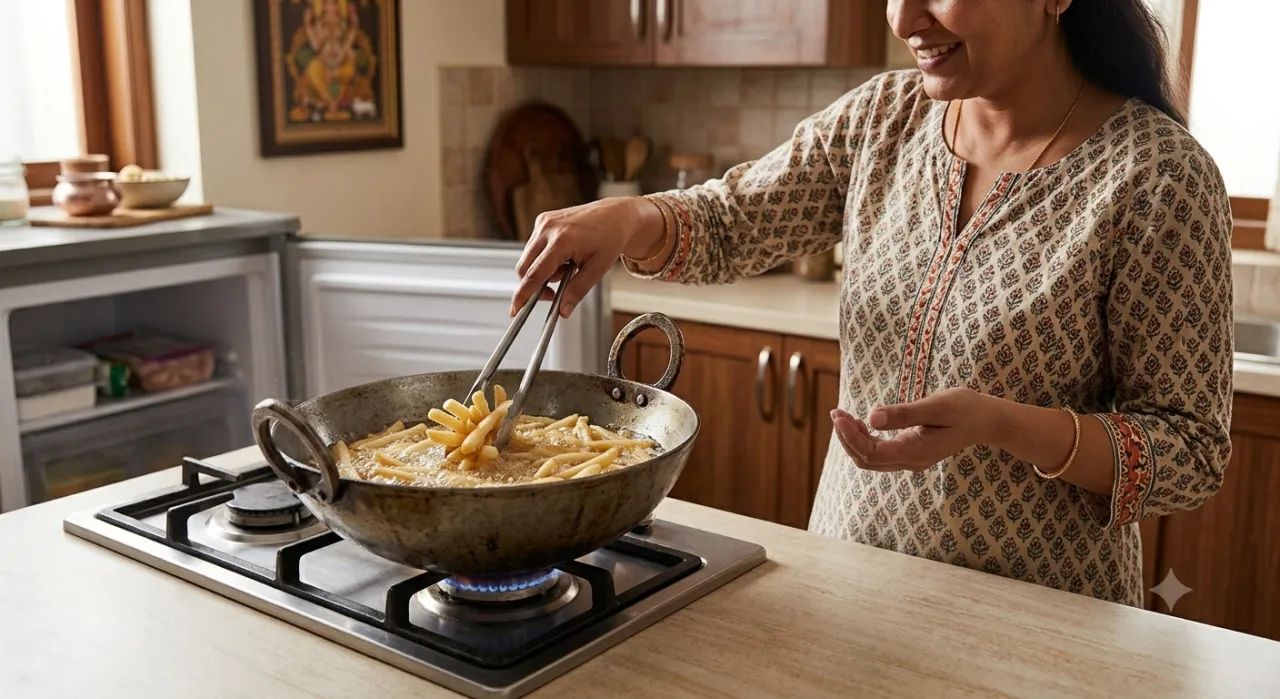
Myth 3: 'Frozen means old', commercial products are typically frozen within hours of production, then the clock effectively stops. Myth 4: 'You can refreeze thawed food', false for safety; once thawed, cook it. Myth 5: 'Frozen food must be thawed before cooking', the opposite; breaded snacks are designed to cook from frozen. Myth 6: 'Freezer burn means the food is spoiled', freezer burn is a texture/quality issue from air exposure, not a safety hazard. Myth 7: 'All frozen food is junk food', the freezer aisle spans everything from plain vegetables and prawns to indulgent snacks; the format says nothing about the nutrition.
What to actually check on a frozen snack label
Four things worth 20 seconds at the freezer door: (1) the ingredient list, shorter is generally better; (2) protein per 100g if you want the snack to count for something; (3) whether the pack states 'no added preservatives', confirmed by the ingredient list; (4) FSSAI license and storage instructions, a brand that documents its cold chain takes it seriously.
Your questions, answered
Does frozen food contain preservatives?
Not necessarily. Freezing at -18°C stops microbial growth by temperature alone, which is why many frozen foods are made with no added preservatives.
Is frozen food less nutritious than fresh food?
Generally no. Freezing causes relatively little nutrient loss, and frozen food can hold its nutrients better than produce stored for days at room or fridge temperature.
Can I refreeze frozen food after thawing?
No. Once thawed, cook the product. Refreezing thawed food degrades texture and is a food-safety risk.
What does IQF mean on frozen food packs?
Individually Quick Frozen, pieces are frozen separately and rapidly, forming smaller ice crystals that preserve texture and letting you cook exactly the quantity you need.