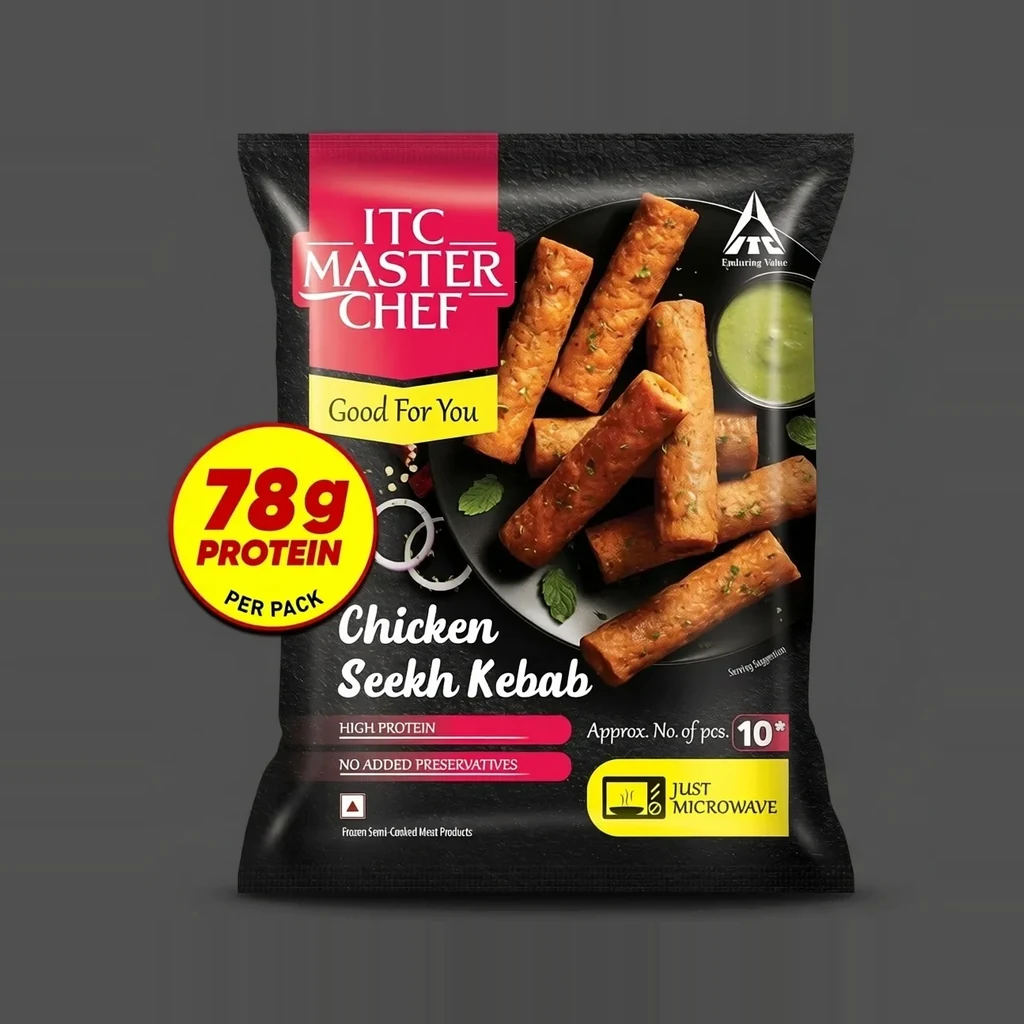
Exam-week snacking has two simple jobs: something satisfying in the afternoon and lighter food later in the evening. That means substantial snacks in the afternoon slot, protein-forward and paired with fruit or curd, and deliberately lighter fare after 8 pm. The ten-minute freezer plate is a quiet ally here: it ends the 'what can I eat' kitchen wandering that eats study breaks.
On this page
Five revision plates, 10 minutes each
1. Seekh kebab bites with curd dip. 2. Nuggets with hummus and cucumber. 3. Potato shots and a banana, the quick comfort plate before a mock test. 4. Hara bhara kebab in a folded roti with buttermilk. 5. Popcorn chicken over leftover dal-rice, the mini-meal when dinner is far away.
Timing beats menu
A 4-4:30 pm snack fits neatly between school and the evening study block, and leaves room for dinner. Keep a 2.5-3 hour gap to dinner, and keep the post-dinner slot light: fruit, milk, a few plain pieces at most. Keep fried food for earlier in the day and late-evening eating light.
The parent's exam-week kit
Stock two protein formats (kebabs, nuggets or strips) and one comfort format (shots or tikki), plus curd, hummus, fruit and milk. Ten-minute plates on demand, no negotiation energy spent, and the study-break clock stays honest. The snack is in service of the schedule, not the other way round.
Your questions, answered
What are good snacks during exam preparation?
Protein-forward plates in the afternoon: kebab bites with curd, nuggets with hummus, popcorn chicken over dal-rice, paired with fruit. Ten minutes each.
Should students snack late at night while studying?
Keep post-9 pm eating light: fruit, milk, a small plain portion.
How big should a study-break snack be?
Keep it snack-sized: 3-5 pieces with curd or fruit rather than a large plate.
What is the best snack timing on exam days?
A proper 4 pm snack the day before, a normal breakfast on the day, and a light familiar snack an hour before the exam, nothing new, nothing heavy*.
* Indicative serving ideas, not dietary advice.